Navigating the Noise: A Look at Trimmed Mean Inflation
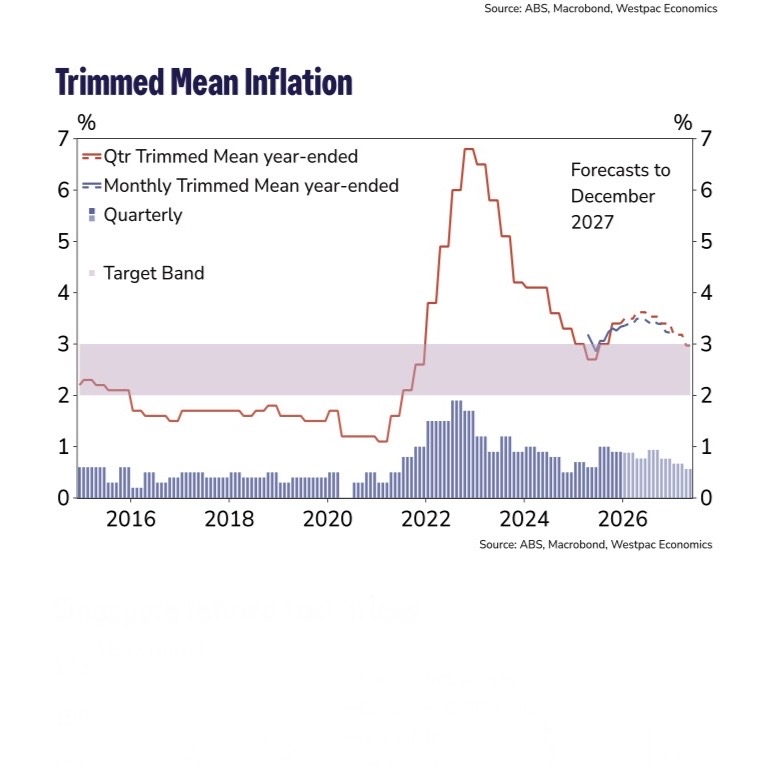
Financial charts can often feel like a foreign language, but some tell a story that’s crucial for every household and business. One such story is that of Australia's trimmed mean inflation. If you've seen a chart showing inflation peaking dramatically before starting a slow descent towards a target band, you've witnessed the narrative of our recent economic journey.
So, what exactly is "trimmed mean inflation"? Think of it as a way to get a clearer picture of the underlying inflation trend. The Australian Bureau of Statistics (ABS) calculates it by taking the basket of goods and services that makes up the Consumer Price Index (CPI) and temporarily removing the 15% of items with the biggest price rises and the 15% with the largest falls. This method provides a more stable reading of inflation by stripping out volatile, one-off price shocks. This is the measure the Reserve Bank of Australia (RBA) watches closely when making decisions about interest rates.
A look at the recent past shows a dramatic arc. After a period of relative stability, inflation surged around 2021-2022, peaking near 7%. This reflected global supply chain issues and strong domestic demand. Since then, we have seen a steady decline through 2023 and 2024 as the RBA's interest rate hikes took effect and supply pressures eased.
According to the latest data from the ABS, the annual trimmed mean inflation rate was 3.3% in the 12 months to February 2026, holding steady from the previous month. While headline inflation has eased slightly, this "sticky" underlying figure remains just above the RBA's 2-3% target band. Economists and institutions like Westpac Economics are now watching these figures intently. Forecasts stretching to the end of 2027 suggest a gradual stabilisation, with the inflation rate expected to hover around the 3% mark, near the top of the central bank's target.
This path from a fiery peak towards a more manageable level is a positive sign for economic stability. It suggests that while challenges remain, the measures taken to curb inflation are steering the economy in the right direction, aiming for a future where price growth is back within its target zone.